


Lunar Calendar Machine Blade Laser Cladding Repair Processing
Contact Info
- Add:西安市国家民用航天产业基地航天基地299号西安建工科技创业基地十号楼4层, Zip:
- Contact: 段纯
- Tel:17392761868
- Email:gsjgkj@163.com
Other Products


Laser cladding repair technology is an advanced surface modification and repair process that demonstrates significant advantages in the restoration of agricultural machinery blades. Its principle involves using a high-energy laser beam as a heat source to instantly melt specific alloy powders (such as wear-resistant or corrosion-resistant alloy materials), forming a strong metallurgical bond with the substrate material on the blade surface. This process restores the dimensional accuracy of the blade and enhances its surface performance.
For agricultural machinery blades, the outstanding advantages of laser cladding repair are reflected in several aspects.
First, the repair precision is high. The laser beam has concentrated energy and a small heat-affected zone, allowing precise control over the thickness and range of the cladding layer, thereby avoiding thermal deformation that could affect the blade's usage accuracy.
Second, performance improvement is significant. The cladding layer can be tailored with suitable alloy materials based on the blade's operational requirements, greatly enhancing its wear resistance, corrosion resistance, and oxidation resistance, thereby extending its service life.
Furthermore, material utilization is high. Compared to traditional repair methods like overlay welding, laser cladding minimizes waste of powder materials, making it more energy-efficient and environmentally friendly.
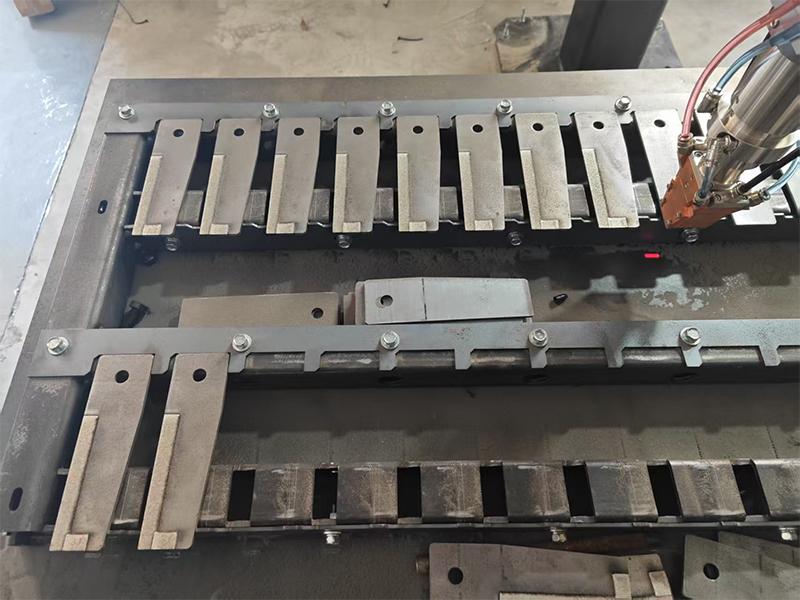
The processing flow for laser cladding repair of agricultural machinery blades is roughly as follows:
The first step is pretreatment. The blade surface to be repaired must be cleaned, derusted, and polished to remove oil stains, oxide layers, and fatigue layers, ensuring the substrate surface is clean and providing a good foundation for subsequent cladding.
The second step is powder selection and preparation. Based on the blade's material (such as high-speed steel or alloy tool steel) and working environment, a matching alloy powder is selected and dried to prevent agglomeration.
The third step is laser cladding. Using specialized laser cladding equipment, the laser beam is focused on the area of the blade to be repaired while powder is simultaneously fed, causing the powder and substrate surface to rapidly melt and solidify, forming a dense cladding layer.
The fourth step is post-treatment. The clad blade is polished, ground, or heat-treated to eliminate internal stress and ensure dimensional accuracy and mechanical properties.
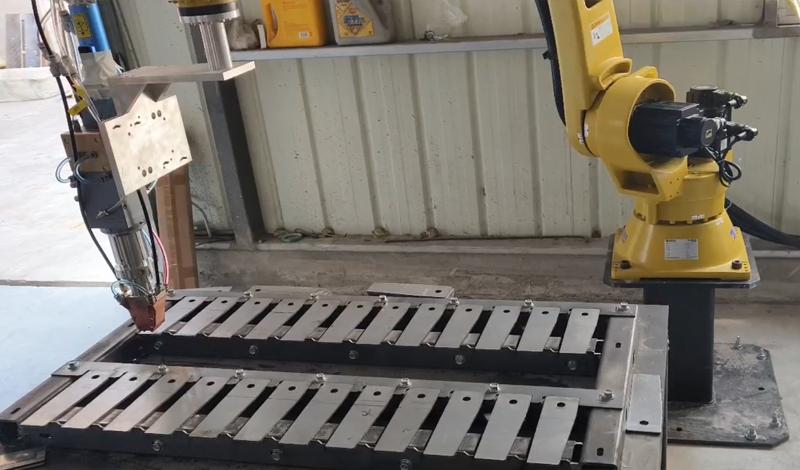
Laser cladding repair technology is particularly suitable for agricultural machinery blades experiencing localized wear, chipping, or dimensional deviations. Compared to replacing with new blades, it not only significantly reduces costs but also shortens repair cycles and improves equipment utilization. However, during laser cladding repair, process parameters such as laser power, scanning speed, and powder feed rate must be strictly controlled to ensure the quality of the cladding layer. Additionally, analysis of the blade material and rational selection of alloy powder are crucial, as they directly impact the performance and lifespan of the repaired blade.
From the perspective of technical application details, during the laser cladding process, the laser power directly affects the temperature and depth of the molten pool. Excessive power may cause over-melting of the substrate, affecting the blade's overall performance, while insufficient power may prevent proper bonding between the powder and substrate. Scanning speed influences the uniformity of the cladding layer; too fast a speed may result in a discontinuous layer, while too slow a speed may expand the heat-affected zone. The powder feed rate must be matched with the laser power and scanning speed; too much powder may not fully melt, while too little may fail to form a cladding layer of the required thickness.
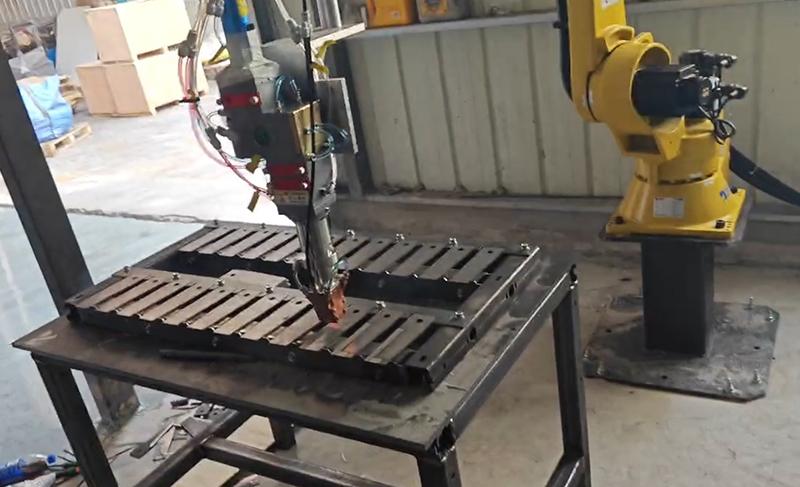
Compared to other repair technologies, laser cladding repair also has its unique features. For example, traditional argon arc welding repair, though lower in cost, has a large heat-affected zone, easily causing blade deformation, and offers limited improvement in surface performance after repair. Electro-brush plating repair is suitable for small, precision components, but the coating thickness is thin, making it less effective for severely worn agricultural machinery blades. In contrast, laser cladding repair offers advantages in repair precision, performance enhancement, and applicability, making it particularly suitable for agricultural machinery blades requiring high precision and performance.
Moreover, in practical operations, quality inspection of the repaired blade is necessary. Common inspection methods include visual inspection, hardness testing, and metallographic analysis. Visual inspection primarily checks for defects such as cracks, pores, or inclusions in the cladding layer. Hardness testing determines whether the cladding layer's hardness meets usage requirements. Metallographic analysis observes the bonding between the cladding layer and the substrate and whether the internal structure is uniform. Through these inspection methods, it is ensured that the repaired agricultural machinery blade can function properly.
| Industry Category | Others |
|---|---|
| Product Category | |
| Brand: | 国盛激光 |
| Spec: | |
| Manufacturer: | 国盛激光 |
| Origin: | 116101 |


